The new 2026 rental law in Venezuela: what changes for the owner
Tu Espacio Ccs, more than 20 years in Caracas · Updated September 15, 2026 · 5 min
This guide is a translation of the Spanish original, which is the version our partner lawyer reviews. Leer el original en español
Short answer
The Law on the Special Regime for Leasing Residential Property, published in Extraordinary Official Gazette 7,065 of 7 August 2026, only applies to contracts signed from that date. Under it the rent is agreed freely and can be set in foreign currency, the deposit is capped at three months, and eviction is sought directly before a municipal court, without the earlier step through SUNAVI. Earlier contracts remain governed by the 2011 law.
In this guide7 sections · 5 min read
Which contracts fall under the new law
Article 2 limits the law to tenancies agreed or formalised after 7 August 2026. It is not a reform of the 2011 law: it is a separate regime running in parallel, and the 2011 law remains alive for everything that does not fall under this one.
Left outside the special regime:
- Contracts signed before 7 August 2026, which continue under the 2011 law and the decree against arbitrary eviction.
- Commercial premises, which have their own law.
- Undeveloped land and rural property.
- Tourist accommodation.
- Housing occupied because of an employment or subordinate relationship.
If your current tenant signed before 7 August, none of what follows applies to them yet. Ask your lawyer whether it is worth ending the contract and signing again under the new regime, and with what risks.
What changes from the 2011 law
| Topic | 2011 law | 2026 special regime |
|---|---|---|
| Initial rent | Set by SUNAVI | Agreed freely by the parties (art. 12) |
| Currency | Bolívares | Can be agreed in foreign currency (art. 14) |
| Eviction | An administrative step first, before SUNAVI | Straight to the municipal court or arbitration (arts. 25 to 27) |
| Deposit | No clear cap in practice | At most three months’ rent, or an insurance policy (art. 16) |
| Notary | Authentication was required | Optional; a private signature is just as valid (art. 9) |
| Repairs | No rule for sharing them | Split at 30% of the monthly rent (art. 15) |
The rent: free at signing, frozen during the contract
You set the initial rent with the tenant (article 12) and it stays the same for the whole term of the contract (article 13). There are no increases mid-contract, not even for inflation.
On renewal, any adjustment needs both parties to agree. If the rent is in bolívares, the increase cannot exceed the change in the Consumer Price Index published by the Banco Central de Venezuela. If it is in foreign currency, the law sets no mechanism and no cap, which is how most rentals in Caracas work.
That gap for rents in foreign currency is the criticism repeated most by the lawyers who have analysed the law. It leaves the adjustment to whatever your contract says, so it is worth writing carefully from the start: we cover it in the guide to the contract.
The deposit: capped at three months and returned within fifteen days
- You agree one of two guarantees with the tenant: an insurance policy or a deposit of up to three months’ rent (article 16). You cannot require both.
- When the contract ends, you inspect the property with the tenant and record in writing the state you receive it in.
- You return the deposit within fifteen calendar days of the handover, deducting proven repairs and unpaid services (article 18).
Where the deposit was agreed in foreign currency, it can be returned in bolívares if both parties agree.
Property for rent
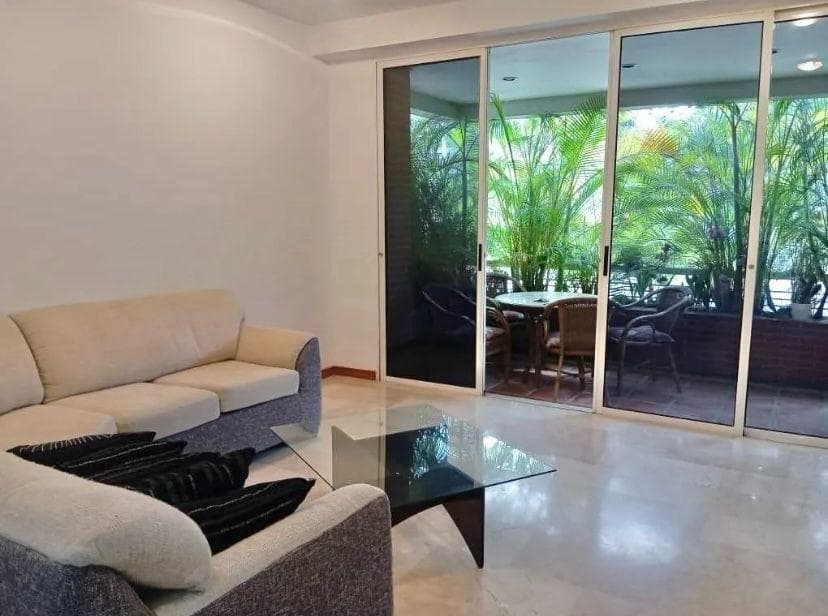 $3,200 / monthApartment · 191 m²Apartment · La Castellana
Looking for another area or budget? We will help you find it.
See more property for rent
Term, automatic continuation and the tenant’s right of first refusal
The term is agreed by the parties and there is no legal minimum. If the contract says nothing, it is taken to be for one year (article 11). If neither party says it wants to end the contract when it expires, it continues on the same terms, automatically.
The law sets no notice period for saying you will not renew. That means the period is whatever your contract says: if you do not write it, it does not exist.
Article 20 gives a tenant who is up to date and has been in the property two years or more a right of first refusal if you decide to sell it. If that is your case, read it before listing the property: we explain it in the guide to selling.
What to do before signing the next contract
- Put the contract in writing with the minimum content of article 8: what the contract must say.
- Decide the currency of the rent and, if it is foreign currency, write down how and when it is adjusted.
- Write down the notice period for not renewing, which the law does not provide.
- Define the guarantee: an insurance policy or a deposit of up to three months, and how it is returned.
- Record the state of the property and the services on handover day.
- Check that the property meets the minimum habitability conditions of article 10; the law forbids renting in areas declared high-risk.
Frequently asked questions
Can I charge rent in dollars?
Yes. Article 14 allows the rent to be agreed in foreign currency. The tenant can pay the equivalent in bolívares at the Central Bank’s rate on the day of payment; whether that option depends on the owner’s agreement is a point lawyers disagree on, so it is worth putting it in writing in the contract.
Does the statutory extension still exist?
The 2026 special regime does not mention it, and several analyses consider it abolished for new contracts. Since the contract continues automatically if neither party gives notice that it is ending, the practical effect is similar, but it is not the same thing. Confirm it with your lawyer before counting on it.
Do I have to register the contract with SUNAVI?
The 2026 law does not set out that step for contracts under its regime. Nor does it require taking the contract to a notary: article 9 makes it optional and a private signature is just as valid.
What happens to the contract I signed in 2024?
It remains under the 2011 law and the decree against arbitrary eviction, including the prior SUNAVI procedure. The new regime only reaches contracts signed from 7 August 2026.
7 dated sources
- Acceso a la Justicia: análisis de la Ley del Régimen Especial de Arrendamiento (opens in a new tab) · August 20, 2026
- Acceso a la Justicia: luces y sombras de la nueva ley (opens in a new tab) · September 1, 2026
- Asamblea Nacional: sanción de la ley (opens in a new tab) · July 31, 2026
- Finanzas Digital: Gaceta Oficial 7.065 extraordinaria (opens in a new tab) · August 7, 2026
- Torres Plaz & Araujo: aspectos más relevantes de la ley (opens in a new tab) · September 1, 2026
- Cedré Abogados: fin del paso previo ante la SUNAVI (opens in a new tab) · August 12, 2026
- El Universal: entrada en vigencia (opens in a new tab) · August 13, 2026